is vitamin B9. In cerebral folate deficiency there is too little of it in the , even when there is enough in the blood.
It was first described in 2005. Doctors reported children with low folate in this fluid whose symptoms improved after , a prescription form of folate. Some of those children had features of autism, which led Dr. Frye to study leucovorin in autism.
Cerebral folate deficiency (CFD) is a low level of 5-methyltetrahydrofolate (5-MTHF) in (CSF). Ramaekers and colleagues first described it in 2005 in 28 patients, 25 of whom had autoantibodies to the folate receptor.1
In that study and related ones, leucovorin normalized 5-MTHF in the CSF and improved neurological symptoms, including movement disorders, seizures and cognitive impairment. The effect was more pronounced in children who began treatment at an earlier age. Several patients also had autistic features.
What causes it?
Most often the cause is an . It attaches to the folate receptor, the protein that carries folate into the fluid around the brain, and blocks it.
Carrying folate across takes energy. So a second cause is mitochondrial dysfunction, when cells cannot make enough of it. Rarely, the cause is a change in FOLR1, the gene for the receptor. A child can have more than one cause.
Folate receptor alpha (FRα), encoded by FOLR1, is the primary mechanism by which folate is transported into the CSF. The transport is active and energy-dependent. Folate receptor autoantibodies (FRAAs) block it.
In autism, a systematic review attributes CFD to immune dysfunction in 83% of cases, mitochondrial dysfunction in 43% and genetic variants in 14%. The shares pass 100% because some children have more than one.8 Pathogenic FOLR1 variants are exceedingly rare: 35 cases have been documented.10
BloodFolate receptorFluid around the brain
Typically
With a folate receptor autoantibody
FolateFolate receptorAutoantibody
SchematicHow folate reaches the fluid around the brain, and what an autoantibody blocks. Not to scale: the marks are an illustration, not a count.Drawn from the foundation’s statement of 1 October 2025, Appendix B.
How is it found?
There are two tests. The simpler one is a blood test that looks for the autoantibodies.
The other is a , which measures folate in the fluid directly. A diagnosis of cerebral folate deficiency requires it, and it is a hard test to give a child with severe autism.
Diagnosis requires a showing low 5-MTHF in the CSF. FRAAs are measured in blood, which makes them the more accessible biomarker. In the 2013 study, FRAA levels correlated with lower CSF folate in the 16 children who had a lumbar puncture.2
Two further markers are being defined: the binding FRAA11 and the soluble folate receptor.12
What is leucovorin?
Leucovorin, also called , is a prescription form of folate. It has been used for over 80 years and is best known for its use alongside chemotherapy.
In September 2025 the FDA changed leucovorin’s label to include genetically confirmed cerebral folate deficiency. The label does not include autism, so prescribing it for autism is off-label.
Leucovorin () is a prescription form of folate, used for over 80 years to rescue patients from the effects of chemotherapy. The September 2025 label change recognizes it for genetically confirmed CFD, which implies a pathogenic FOLR1 variant, and not for autism spectrum disorder.9
The foundation is also studying levo-leucovorin, a purified form given as a tasteless liquid. That research is not yet complete.
What should we know before asking about it?
The foundation’s statement lists problems that families and doctors meet in practice.
Other medicines can interact
Some seizure medicines change how the body handles folate. So do methotrexate and similar medicines. A child who takes any of them needs their medicines coordinated and monitored with care.
A supplement is not the same thing
Over-the-counter folinic acid is not regulated as a medicine, and its quality varies. Most products are measured in micrograms, while leucovorin is prescribed in milligrams. One milligram is 1,000 micrograms. The statement cautions parents against using a supplement in its place.
Folic acid is a different thing again. It is a synthetic form of folate that the body handles differently. The statement says it should not be used to treat cerebral folate deficiency or autism.
Brands are made differently
Leucovorin is a generic medicine. Each brand uses different inactive ingredients, such as milk derivatives, binders and dyes, and children often tolerate some of them poorly. Many children cannot manage tablets at all.
Shortages and brand switches happen
Generic leucovorin is prone to shortages, and a pharmacist can change the brand without telling the family. A sudden stop or a switch can bring side effects or a setback.
It can be expensive
Where insurance does not cover it, the cost can be high. In September 2025 the retail price of a typical one-month supply was about $1,225, by GoodRx estimates. With rebates and coupons it often ran from $100 to $800 a month.
Twenty years of evidence, in the order it arrived.
Each step gives its design and its size. No result here is put more strongly than the study behind it.
Read this as
2005
The condition is described.
Ramaekers and colleagues describe cerebral folate deficiency in the New England Journal of Medicine. They report children with low folate in the fluid around the brain whose symptoms improved after leucovorin.
Of the 28 patients, 25 had antibodies against the folate receptor. None of the 28 people in a comparison group of the same age did.
All 28 patients had low 5-MTHF in cerebrospinal fluid. On leucovorin, 5-MTHF in the fluid was normal at six months, and symptoms improved.1
Patients
Comparison group
Had the autoantibodiesDid not
One mark is one person. Source: Ramaekers et al., 2005, in the statement’s Appendix A.
2013
A marker that a blood test can find.
Drs. Frye and Rossignol test 93 children with autism for the autoantibodies. About three in four are positive.
Children who test positive are offered leucovorin, and a waitlist group is the comparison. The study is open-label: families and doctors know who is being treated.
Published in Molecular Psychiatry. In the 16 children who had a lumbar puncture, autoantibody levels correlated with lower folate in the fluid. Open-label arm: 23 treated and 26 on the waitlist, for a mean of four months. Improvements were reported in receptive and expressive language, verbal communication, stereotyped behavior and attention.2
Positive, about 75%Negative
One mark is one of the 93 children. Source: Frye et al., 2013, as given in the statement.
2018
The first blinded trial.
Dr. Frye runs the first double-blind, placebo-controlled trial of leucovorin in autism. For 12 weeks, 23 children take leucovorin and 25 take a placebo. Neither families nor doctors know who has which.
The main measure is verbal communication. It improves more with leucovorin than with placebo.
Published in Molecular Psychiatry. Improvements were also reported in stereotyped behavior, social withdrawal and hyperactivity, compared with placebo. The statement calls the effect size large and gives a number needed to treat of 1.8 over 12 weeks for children positive for the autoantibodies.3 The response rates it reports are on the trial’s page, beside what they can and cannot show.
Independent researchers in 4 countries run their own randomized, blinded, placebo-controlled trials: in France, Iran, India and China. The foundation’s statement says they largely replicated the first result.
With the first trial, that makes 5 blinded, controlled trials and 293 children. One trial ran for 24 weeks.
In the 2021 trial, risperidone was given in both groups. The 2013 open-label study is not counted among these.4–7
2018
12 weeks
The first · Dr. FryeFrye et al.Molecular Psychiatry
United States · 48 children Double-blind, placebo-controlled
2020
12 weeks
Renard et al.Biochimie
France · 19 children Placebo-controlled, randomized
2021
10 weeks
Batebi et al.Child Psychiatry & Human Development
Iran · 66 children Double-blind, placebo-controlled
2024
24 weeks
Panda et al.European Journal of Pediatrics
India · 80 children Double-blind, placebo-controlled
2025
12 weeks
Zhang et al.Nutrients
China · 80 children Blinded, placebo-controlled
Assigned leucovorin, 155Assigned placebo, 138
Fig. 1The 5 blinded, controlled trials of leucovorin in autism. One mark is one child, in the group the child was assigned to. The bracket is the trial’s length.Source: the foundation’s statement, Appendix C. Countries are from the authors’ affiliations.
2025
A label change, and a caution.
In September the FDA changes leucovorin’s label to include genetically confirmed cerebral folate deficiency. The change does not cover autism.
On 1 October the foundation publishes its statement. It backs larger and longer studies, calls for a formulation made for children, and says that leucovorin is not an “autism pill”.
A genetically confirmed case implies a pathogenic FOLR1 variant.9 The statement expects very few children with autism to meet that definition, and says the foundation has opened discussions with the FDA on a registration trial of a pediatric formulation.13
For clinicians and researchers: a table of every trial, with full references and DOIs.
The evidence in detail
Table 1 The leucovorin trials listed in the foundation’s statement
The details of each trial are given beside Fig. 1 above.
Scroll the table sideways to see every column. † Open-label, so not one of the blinded trials in Fig. 1 or in the totals. Its duration is a mean. Source: Appendix C of the statement. Countries are taken from the authors’ affiliations.
References
Ramaekers VT, Rothenberg SP, Sequeira JM, Opladen T, Blau N, Quadros EV, Selhub J. Autoantibodies to folate receptors in the cerebral folate deficiency syndrome. N Engl J Med. 2005;352(19):1985–91. doi:10.1056/NEJMoa043160 (opens doi.org)
Frye RE, Sequeira JM, Quadros EV, James SJ, Rossignol DA. Cerebral folate receptor autoantibodies in autism spectrum disorder. Mol Psychiatry. 2013;18(3):369–81. doi:10.1038/mp.2011.175 (opens doi.org)
Frye RE, Slattery J, Delhey L, Furgerson B, Strickland T, Tippett M, Sailey A, Wynne R, Rose S, Melnyk S, Jill James S, Sequeira JM, Quadros EV. Folinic acid improves verbal communication in children with autism and language impairment: a randomized double-blind placebo-controlled trial. Mol Psychiatry. 2018;23(2):247–256. doi:10.1038/mp.2016.168 (opens doi.org)
Renard E, Leheup B, Guéant-Rodriguez RM, Oussalah A, Quadros EV, Guéant JL. Folinic acid improves the score of Autism in the EFFET placebo-controlled randomized trial. Biochimie. 2020;173:57–61. doi:10.1016/j.biochi.2020.04.019 (opens doi.org)
Batebi N, Moghaddam HS, Hasanzadeh A, Fakour Y, Mohammadi MR, Akhondzadeh S. Folinic Acid as Adjunctive Therapy in Treatment of Inappropriate Speech in Children with Autism: A Double-Blind and Placebo-Controlled Randomized Trial. Child Psychiatry Hum Dev. 2021;52(5):928–938. doi:10.1007/s10578-020-01072-8 (opens doi.org)
Panda PK, Sharawat IK, Saha S, Gupta D, Palayullakandi A, Meena K. Efficacy of oral folinic acid supplementation in children with autism spectrum disorder: a randomized double-blind, placebo-controlled trial. Eur J Pediatr. 2024;183(11):4827–4835. doi:10.1007/s00431-024-05762-6 (opens doi.org)
Zhang C, Chen Y, Hou F, Li Y, Wang W, Guo L, Zhang C, Li L, Lu C. Safety and Efficacy of High-Dose Folinic Acid in Children with Autism: The Impact of Folate Metabolism Gene Polymorphisms. Nutrients. 2025;17(9):1602. doi:10.3390/nu17091602 (opens doi.org)
Rossignol DA, Frye RE. Correction: Rossignol DA, Frye RE. Cerebral Folate Deficiency, Folate Receptor Alpha Autoantibodies and Leucovorin (Folinic Acid) Treatment in Autism Spectrum Disorders: A Systematic Review and Meta-Analysis. J Pers Med. 2021;11:1141. J Pers Med. 2022;12. doi:10.3390/jpm12050721 (opens doi.org)
Goldman ID. FOLR1-Related Cerebral Folate Transport Deficiency. 2024 Jan 11. In: Adam MP, Feldman J, Mirzaa GM, et al., editors. GeneReviews [Internet]. Seattle (WA): University of Washington, Seattle; 1993–2025. ncbi.nlm.nih.gov/books/NBK599286 (opens ncbi.nlm.nih.gov)
Frye RE, McCarty PJ, Werner BA, Scheck AC, Collins HL, Adelman SJ, Rossignol DA, Quadros EV. Binding Folate Receptor Alpha Autoantibody Is a Biomarker for Leucovorin Treatment Response in Autism Spectrum Disorder. J Pers Med. 2024;14(1):62. doi:10.3390/jpm14010062 (opens doi.org)
Frye RE, Lane A, Worner A, Werner BA, McCarty PJ, Scheck AC, Collins HL, Adelman SJ, Quadros EV, Rossignol DA. The Soluble Folate Receptor in Autism Spectrum Disorder: Relation to Autism Severity and Leucovorin Treatment. J Pers Med. 2022;12(12):2033. doi:10.3390/jpm12122033 (opens doi.org)
Autism Discovery and Treatment Foundation. Regarding FDA’s Proposed Changes for Leucovorin as a Treatment for Autism Spectrum Disorder. Press release, 1 October 2025. PDF, 13 pages
For families
What can we read, watch or take to the doctor?
News reports tell one family’s story. What the trials found is in the evidence.
The first double-blind, placebo-controlled trial of leucovorin in autism. Over 12 weeks, 23 children on leucovorin improved in verbal communication compared with 25 on placebo.
Frye RE, Slattery J, Delhey L, et al. Molecular Psychiatry, 2018
In 93 children with autism, about three in four tested positive for folate receptor autoantibodies. An open-label study, with a waitlist comparison group.
Frye RE, Sequeira JM, Quadros EV, et al. Molecular Psychiatry, 2013
The first double-blind, placebo-controlled trial of leucovorin in autism. Over 12 weeks, 23 children on leucovorin improved in verbal communication compared with 25 on placebo.
Frye RE, Slattery J, Delhey L, et al. Molecular Psychiatry, 2018
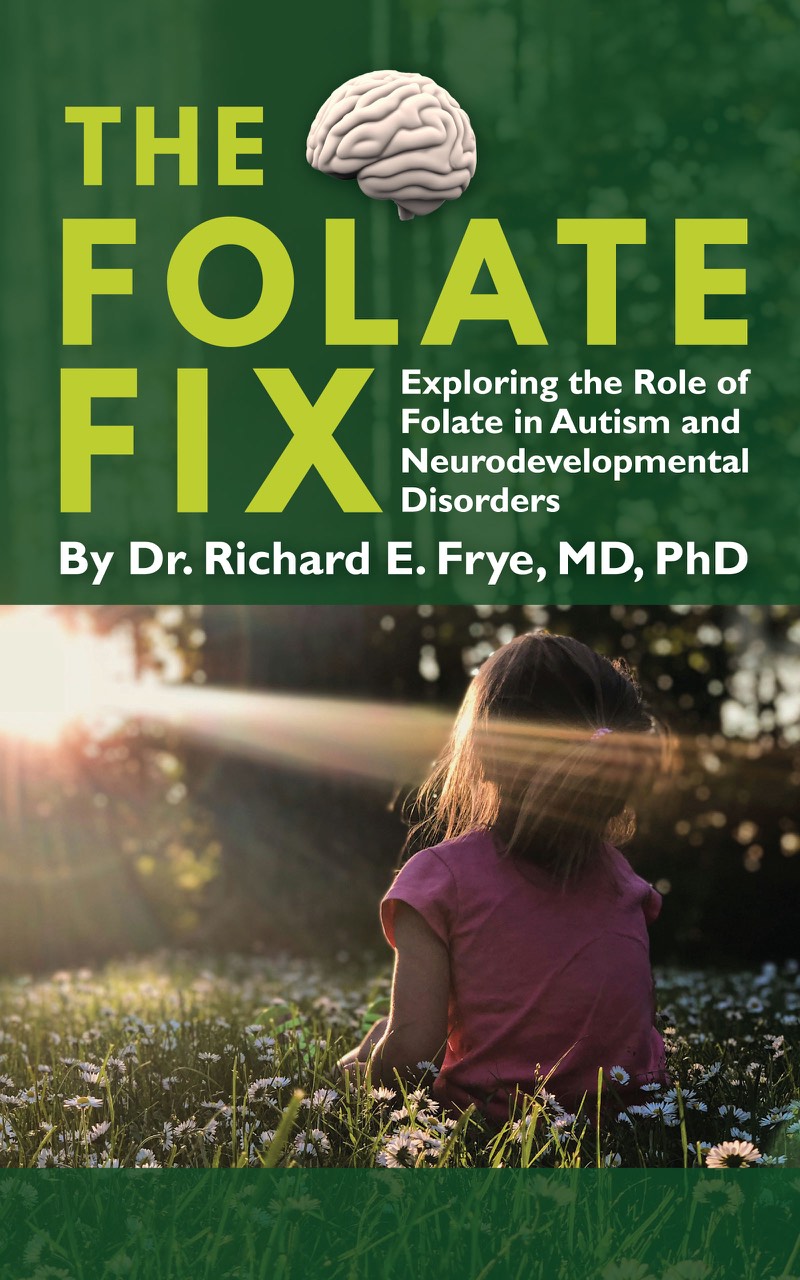
Exploring the Role of Folate in Autism and Neurodevelopmental Disorders
By Richard E. Frye, MD, PhD
The story of folate in autism, told through families’ experiences, with evaluation strategies, treatment practice and answers to the questions clinicians and caregivers ask most.
For families and clinicians · Taught by Dr. Richard Frye · No CME credit
$95
The book and the course are published and sold by Metabolic Learning Resource, which Dr. Frye founded. They are bought on its site and from booksellers, not here.
Fund this research
Fund the next step.
A gift can go straight to a project on this topic that still needs funding.
The projects on this topic are listed with all the others on the donate page.